이 누리집은 대한민국 공식 전자정부 누리집입니다.
Seonwonsa Temple Site, Ganghwa
- Dolmen in Bugeun-ri, Ganghwa
- Chamseongdan Altar, Ganghwa
- Ganghwa Anglican Church
- Golleung Royal Tomb, Ganghwa
- Deokjinjin Fort, Ganghwa
- Outer Wall of Ganghwa Fortress
- Mangsan Beacon Station, Ganghwa (No. 5 Line of Beacon Fire Stations)
- Gareung Royal Tomb, Ganghwa
- Seongneung Royal Tomb, Ganghwa
- Samnangseong Fortress, Ganghwa
- Seonwonsa Temple Site, Ganghwa
- Goryeo Palace Site, Ganghwa
- Gwangseongbo Fort, Ganghwa
- Gapgotdon Outpost, Ganghwa
- Ganghwasanseong Fortress
- Chojijin Fort, Ganghwa
- Hongneung Royal Tomb, Ganghwa
Seonwonsa Temple Site, Ganghwa
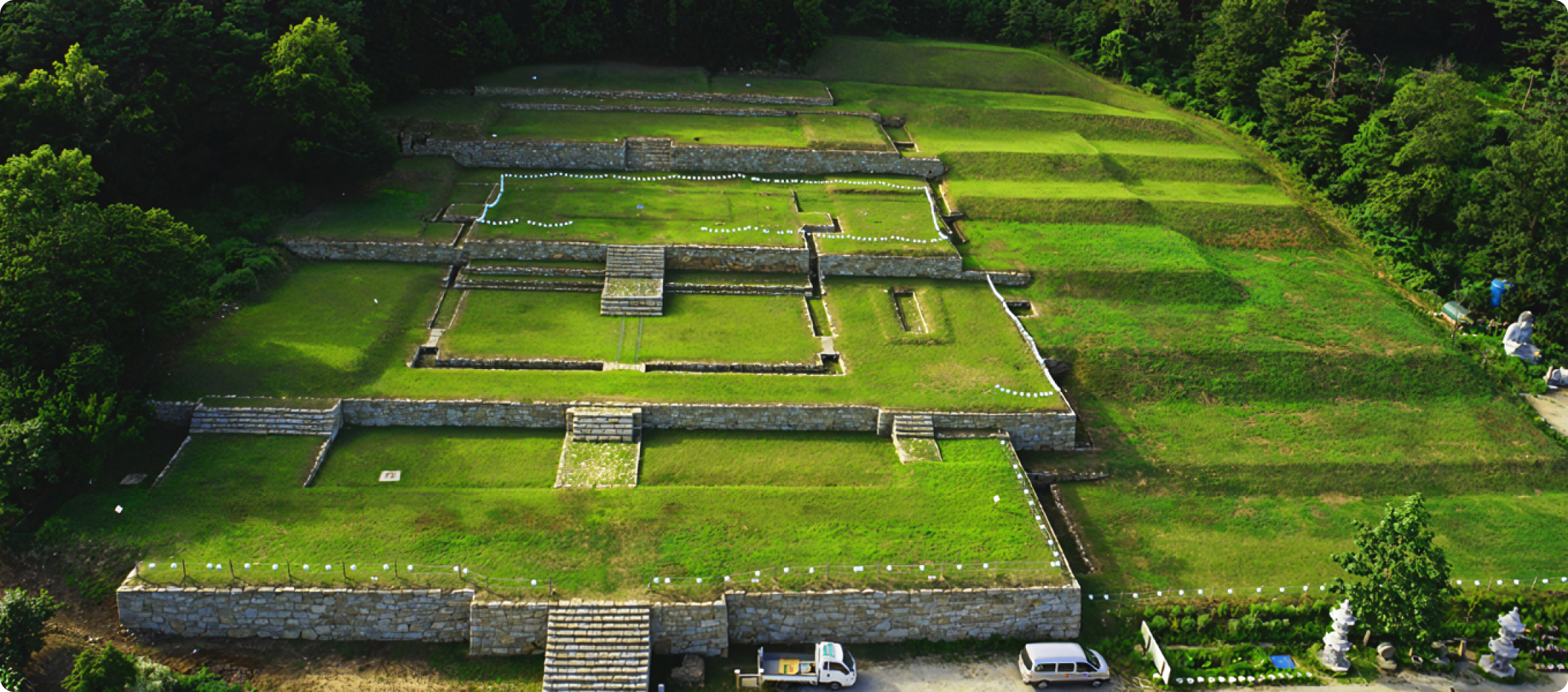
The Seonwonsa Temple Site was first discovered in 1976 by Dongguk University’s Ganghwa Island Academic Survey Team during a surface survey of Ganghwa Island. At the time of its discovery, several foundation stones, bricks decorated with bosanghwa floral designs, roof tiles inscribed with Sanskrit characters (梵字), and decorative roof figurines were identified at the site. As it was a temple site located on Dogamsan Mountain in Dogam Village, Seonwon-myeon, and was considered to have considerable scholarly and historical value in connection with the origins of the local area, it was designated as Historic Site No. 259 in 1977. Four rounds of archaeological excavations conducted from 1996 uncovered building sites, stone retaining walls, roof tiles decorated with lotus designs, a gilt-bronze statue of the Buddha at birth, and a bronze statue of an arhat, confirming that the remains were associated with a Buddhist temple. Twenty-one separate building sites and seven sites of auxiliary corridor buildings were identified, and the buildings are believed to have been densely arranged on four long east–west terraces across terrain that rises in the north and descends toward the south. At the site of a large building in the central area, with a foundation measuring 38 meters in length, the remains of a Buddhist altar believed to have supported a Buddha triad were identified. The central zone, where the building sites are concentrated, measures approximately 180 meters from north to south and 180 meters from east to west. Excavated artifacts include ceramics, roof tiles, a small bronze statue of the Buddha at birth, a gilt-bronze statue of an arhat, and charred fragments of hand-copied Buddhist scriptures. Of the approximately 2,300 ceramic pieces recovered, most are fragments of celadon believed to have been produced between the late 12th and 14th centuries, accounting for 94 percent of the total. Most of the roof-end tiles are decorated with lotus, Sanskrit-character, or gwimok designs, and some bear the inscriptions “Bak clan” (朴氏) and “Yu clan” (劉氏). A total of 21 fragments of chwidus, decorative ridge-end ornaments, were also recovered. In Jolgo Cheonbaek (拙藁千百), a collection of writings by the Goryeo-period scholar Choe Hae (崔瀣), Seonwonsa Temple is described as one of Goryeo’s two leading Seon temples, together with Songgwangsa Temple.
자료관리 담당자
- 담당부서
- 강화군청
- 담당팀
- 전화
- 032-930-3114