이 누리집은 대한민국 공식 전자정부 누리집입니다.
Main Buddha Hall of Jeongsusa Temple, Ganghwa
- Wooden Ksitigarbha Bodhisattva Triad and Ten Underworld Kings of Jeondeungsa Temple, Ganghwa
- Stone Standing Buddha in Jangjeong-ri, Ganghwa
- Five-story Stone Pagoda in Jangjeong-ri, Ganghwa
- Wooden Seated Sakyamuni Buddha Triad of Jeondeungsa Temple, Ganghwa
- Wooden Seated Amitabha Buddha of Cheongnyeonsa Temple, Ganghwa
- Daeungjeon Hall of Jeondeungsa Temple, Ganghwa
- Main Buddha Hall of Jeongsusa Temple, Ganghwa
- Yaksajeon Hall of Jeondeungsa Temple, Ganghwa
- Iron Bell of Jeondeungsa Temple
- Printing Woodblocks for Saddharmapundarika Sutra (The Lotus Sutra)
- Myeonggyeongdae Mirror Stand of Jeondeungsa Temple, Ganghwa
- Iron Seated Amitabha Buddha of Baengnyeonsa Temple, Ganghwa
- Bronze Bell Cast by Buddhist Monk Sain, Ganghwa
Main Buddha Hall of Jeongsusa Temple, Ganghwa
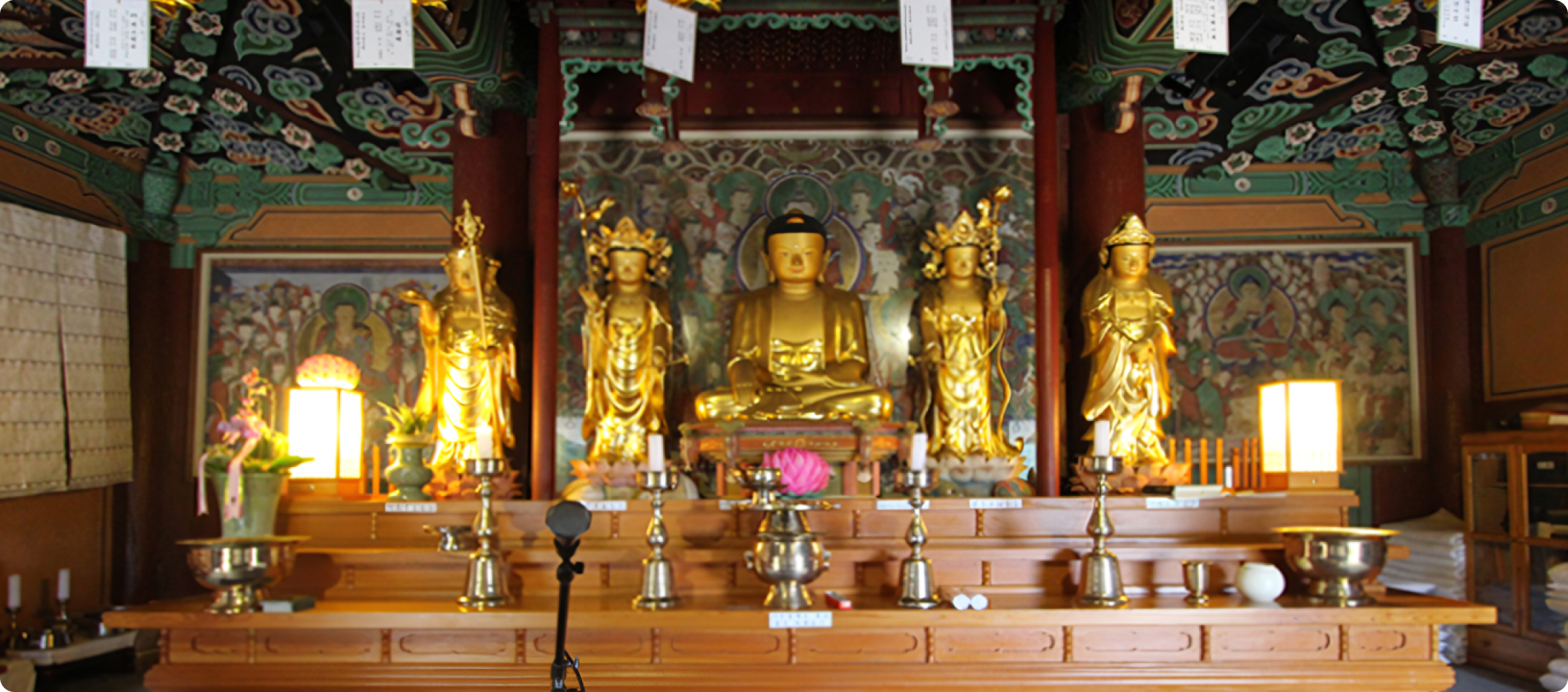
Jeongsusa Temple was founded in 639, the eighth year of the reign of Queen Seondeok of Silla, by Seon Master Hoejeong and was originally named Jeongsusa (淨修寺). During the reign of King Sejong of Joseon, Great Master Hamheo rebuilt the temple. It is said that he changed its name to Jeongsusa (淨水寺), meaning “Temple of Pure Water,” after seeing clear water springing from the ground to the west of the building. This hall is Daeungjeon Hall, where a statue of Sakyamuni Buddha is enshrined. During repair work in 1957, a ridge-beam inscription dated 1689, the 15th year of the reign of King Sukjong, was discovered. According to the inscription, the hall was renovated in 1423, the fifth year of the reign of King Sejong. Architecturally, the hall stands on a platform built of long rectangular stones laid in regular courses. Natural stone foundation stones support round columns with slight entasis, and the upper sections of the columns are connected by changbang tie beams. Bracket clusters are placed only above the columns, making the hall a jusimpo-style building. The building measures three bays across the front and four bays along the sides. It has a gable roof that resembles the Chinese character 人, meaning “person,” when viewed from the side. The bracket structures supporting the weight of the roof are installed only above the columns in the jusimpo style, but their configurations differ between the front and the rear of the building. This indicates that the front aisle was added at a later date. The central door at the front is decorated with elaborate openwork carvings depicting lotus and peony flowers arranged in an elegant vase, demonstrating exceptional craftsmanship. The carved latticework is particularly notable for its simple yet profound beauty.
자료관리 담당자
- 담당부서
- 강화군청
- 담당팀
- 전화
- 032-930-3114