이 누리집은 대한민국 공식 전자정부 누리집입니다.
Yaksajeon Hall of Jeondeungsa Temple, Ganghwa
- Wooden Ksitigarbha Bodhisattva Triad and Ten Underworld Kings of Jeondeungsa Temple, Ganghwa
- Stone Standing Buddha in Jangjeong-ri, Ganghwa
- Five-story Stone Pagoda in Jangjeong-ri, Ganghwa
- Wooden Seated Sakyamuni Buddha Triad of Jeondeungsa Temple, Ganghwa
- Wooden Seated Amitabha Buddha of Cheongnyeonsa Temple, Ganghwa
- Daeungjeon Hall of Jeondeungsa Temple, Ganghwa
- Main Buddha Hall of Jeongsusa Temple, Ganghwa
- Yaksajeon Hall of Jeondeungsa Temple, Ganghwa
- Iron Bell of Jeondeungsa Temple
- Printing Woodblocks for Saddharmapundarika Sutra (The Lotus Sutra)
- Myeonggyeongdae Mirror Stand of Jeondeungsa Temple, Ganghwa
- Iron Seated Amitabha Buddha of Baengnyeonsa Temple, Ganghwa
- Bronze Bell Cast by Buddhist Monk Sain, Ganghwa
Yaksajeon Hall of Jeondeungsa Temple, Ganghwa
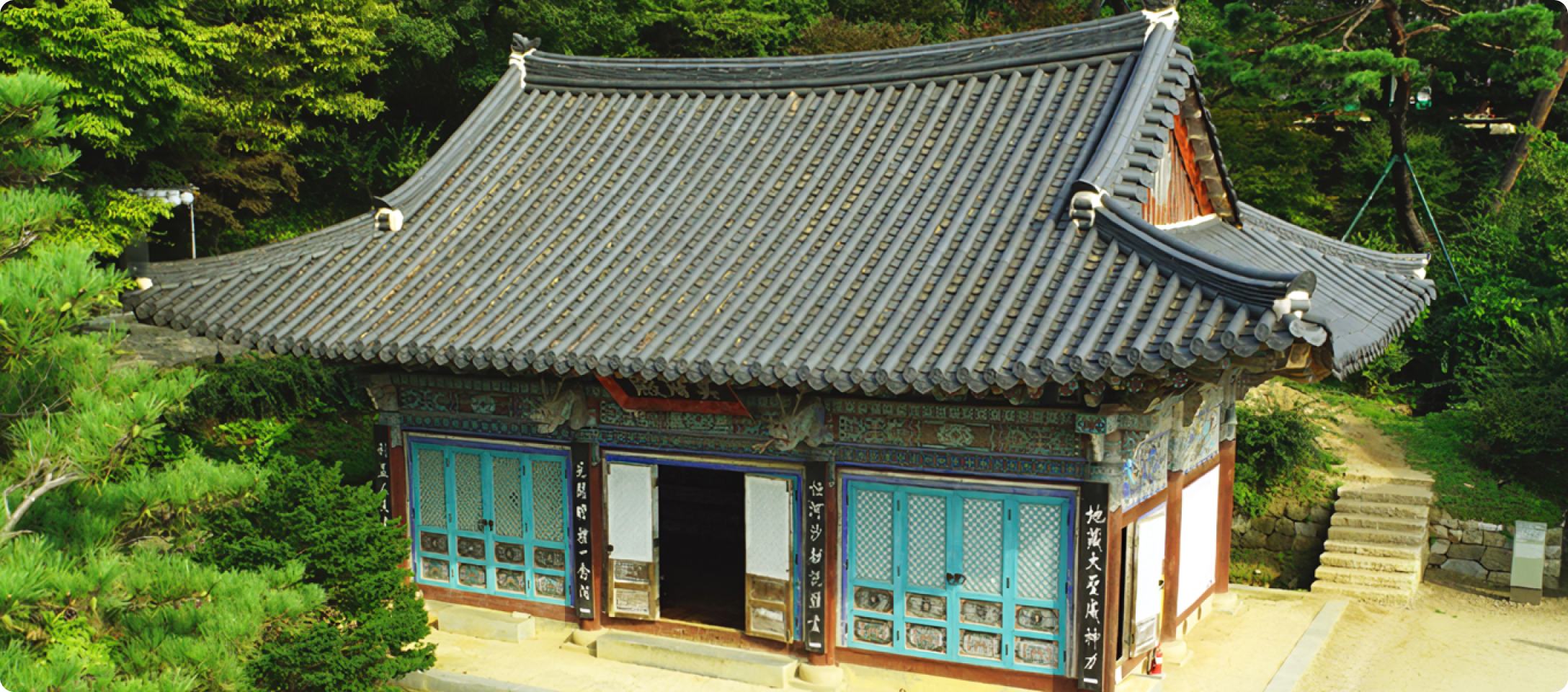
Yaksajeon Hall of Jeondeungsa Temple is a wooden building dating from the mid-Joseon period. According to tradition, Jeondeungsa Temple was founded in 381, the 11th year of the reign of King Sosurim of Goguryeo, by the monk Ado, although little is known with certainty about its history before the mid-Goryeo period. Major fires in 1605, the 38th year of the reign of King Seonjo, and in 1614, the sixth year of the reign of King Gwanghaegun, are said to have destroyed the entire temple complex. The temple is believed to have been restored to its former appearance in 1621, the 13th year of King Gwanghaegun’s reign. The modestly sized Yaksajeon Hall, located to the west of Daeungjeon Hall, is a Buddhist worship hall in which Bhaisajyaguru Buddha, who is believed to cure the illnesses of sentient beings, is enshrined. The Record of the Reroofing and Repair of Daeungjeon and Yaksajeon Halls (大雄殿藥師殿改瓦重修記) states that the roof tiles of Yaksajeon Hall were replaced together with those of Daeungjeon Hall in 1876, the 13th year of the reign of King Gojong. In addition, an inscription on one of the roof tiles indicates that the roof was repaired in 1644, the 22nd year of the reign of King Injo. The building is believed to date from the mid-Joseon period because its structural form and construction techniques are similar to those of Daeungjeon Hall. It measures three bays across the front and two bays along the sides and has a hip-and-gable roof, which resembles the Chinese character 八, meaning “eight,” when viewed from the side. The interior has a coffered ceiling decorated around its edges with elaborate lotus and scrolling vine designs.
자료관리 담당자
- 담당부서
- 강화군청
- 담당팀
- 전화
- 032-930-3114